
AI & Education – Connecting Broad Access Innovators
AI & Education – Connecting Broad Access Innovators
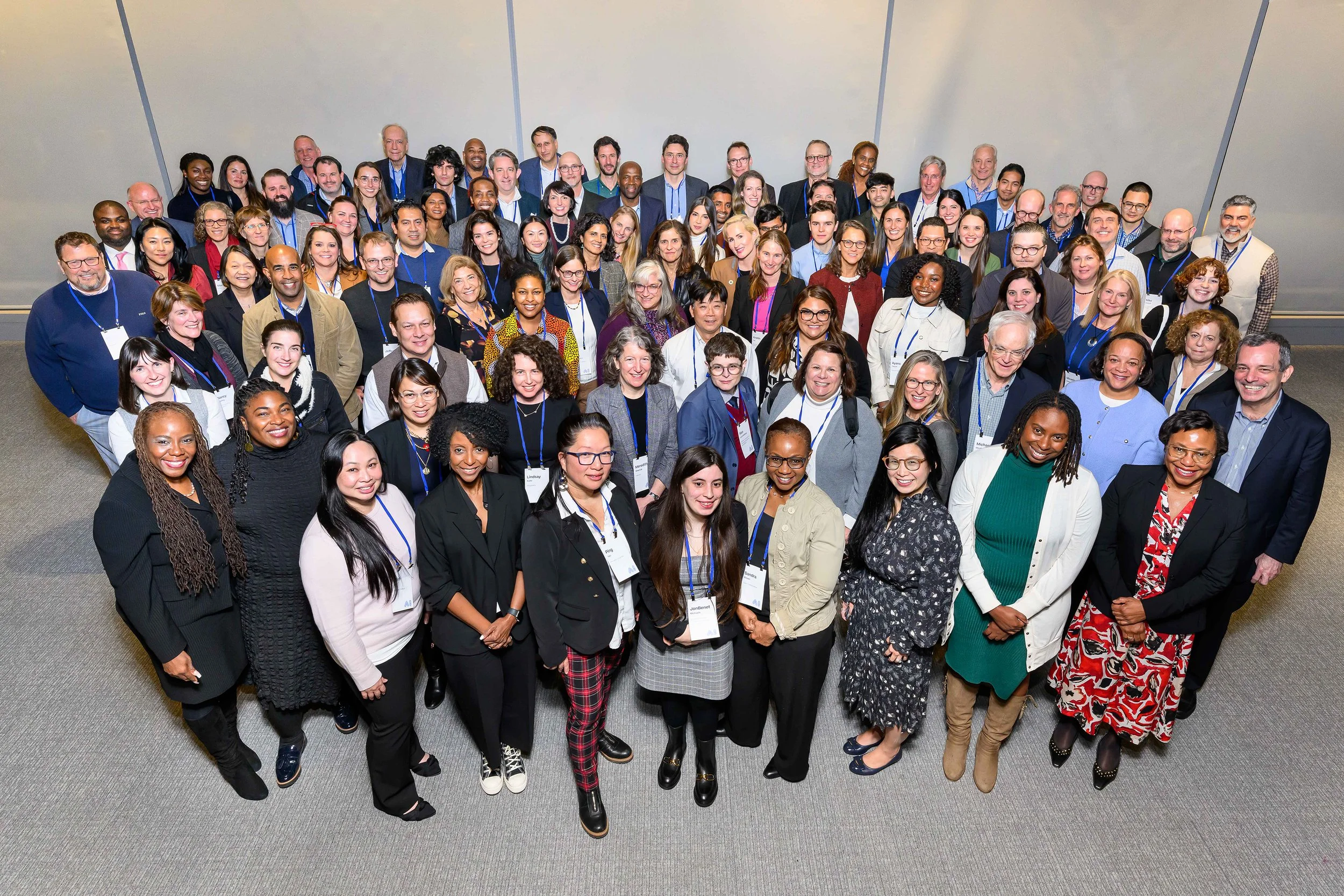
At our third annual AI & Education Convening, students, educators, employers, innovators, and researchers came together with a shared purpose: to co-design an education ecosystem that truly works for today’s learners and for the generations who will follow them.
Axim’s position at the intersection of higher education, industry, and technology gives us both the responsibility and the privilege to convene the leaders who are shaping this moment. More than 100 attendees brought their insight and imagination to our convening. Their contributions did more than shape conversations: they shaped the direction we will carry forward together.
Two broad themes emerged throughout the convening:
It’s essential to keep humans at the center of AI design and use. That is how the education ecosystem can develop AI that encourages human flourishing.
AI’s rapid acceleration can deepen existing divides. But when designed and deployed to enhance real people’s skills, it has the potential to open new doors to opportunity.
Critical Optimism – A Human-Centered Approach to Designing AI
At a time when technology can feel as though it’s outpacing humanity, convening speakers and participants took a critical yet optimistic approach – recognizing AI’s potential to give learners fulfilling experiences and outcomes while remaining clear-eyed about its risks.
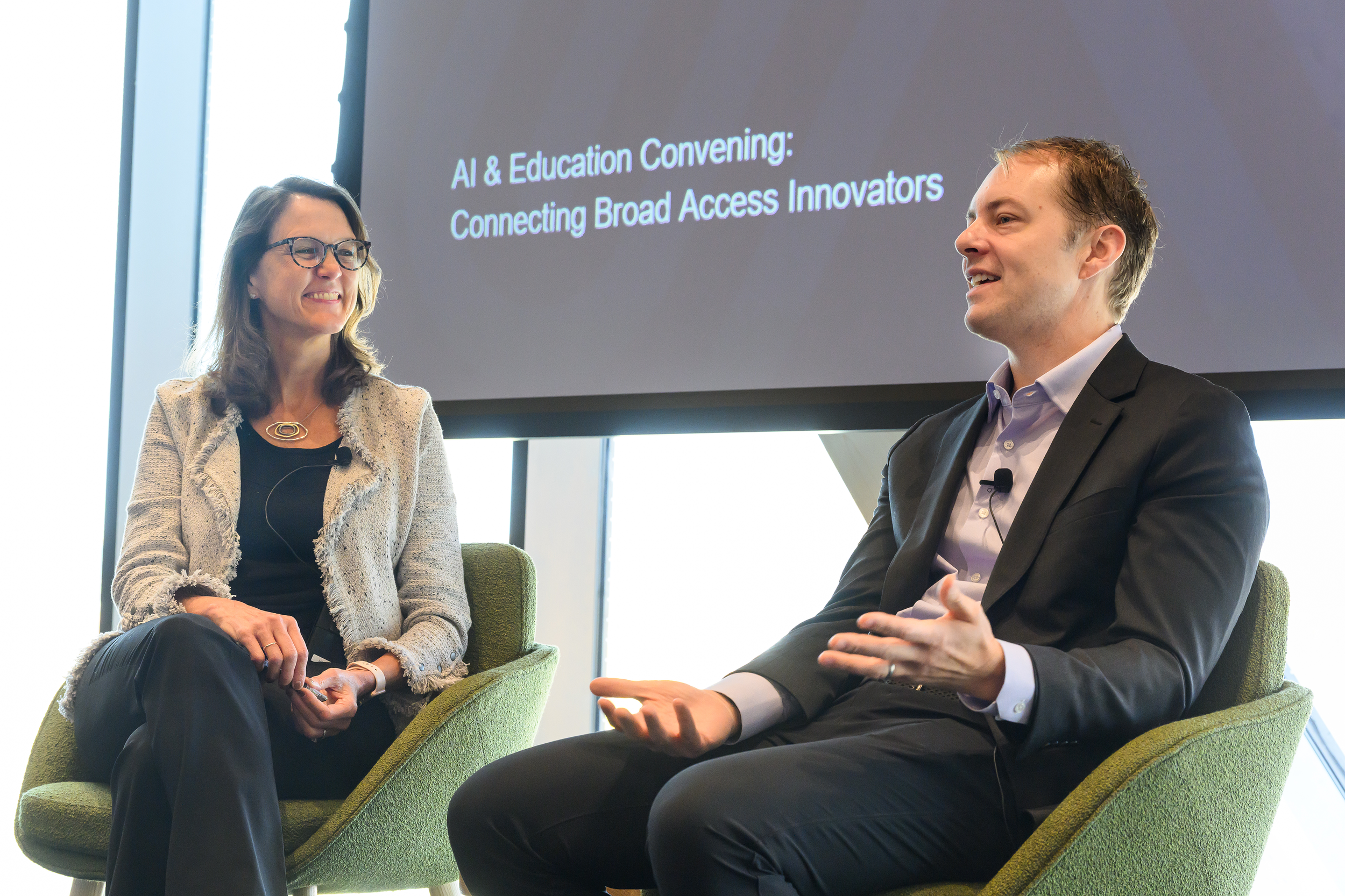
During the first day’s keynote speech, Pattie Maes and Pat Pataranutaporn (MIT Media Lab) explored research on AI’s promises and challenges. They noted that reliance on AI can reduce cognitive engagement, weaken critical reasoning, and shape how people think and connect. Maes and Pataranutaporn also illuminated paths forward, emphasizing AI designs that encourage agency, reflection, and human flourishing. Their keynote left attendees with an important question: How can we design AI to help humans flourish rather than diminish?
On the second day, David Deming (Harvard College) highlighted findings from his recent research with OpenAI on its usage and impact on productivity in his keynote speech. He also noted that while AI can identify learning gaps and deliver personalized content, it cannot provide the kind of critical feedback and understanding that comes from human relationships. As AI’s impact continues to grow, Deming emphasized that the education field cannot sacrifice the student-teacher interactions.

Students also echoed these themes. Maria Victoria Davila (Franklin Cummings Tech student) shared, “As a student, what stood out the most is that AI is powerful, but human relationships are what really matter in education.”
AI should complement what makes people human. We must preserve the relationships, curiosity, and agency that anchor meaningful learning.
Closing the Digital Divide
The digital divide is not new. But the stakes continue to rise.
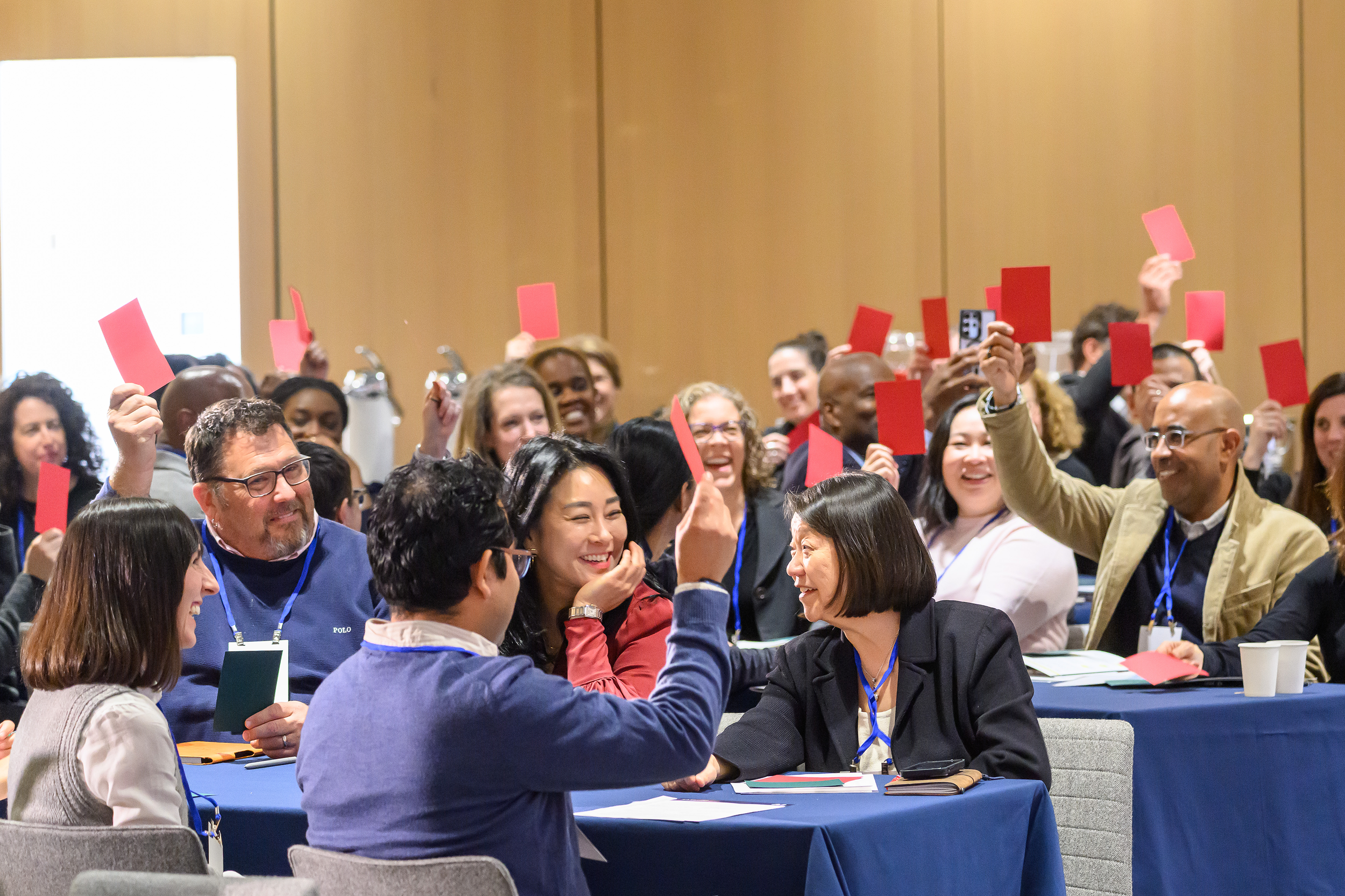
In an interactive exercise, Philipp Schmidt (Axim’s vice president of technology innovation) asked attendees whether they agreed (by holding up a card – green for yes or red for no) with the statement: “AI is something that all higher education institutions need to consider as a strategic priority.” Nearly every card turned green. But when he followed with, “My institution doesn’t just have a strategy, we have a clear and detailed plan and the resources that we need to implement our strategy,” the cards turned overwhelmingly red. The exercise underscored the gap between institutional needs and the resources and capacity that are available.

Many community colleges, vocational trade schools, large public systems, and other broad access institutions receive AI tools without adequate training or support to effectively use them, while other institutions lack access altogether. In our interactive sessions, we saw promising examples of innovation aimed at closing these gaps, where participants shared tools and resources they had developed that were cost effective, open source, and protected student data. Participants also stressed that AI literacy and the judgment to use AI wisely are now foundational, not optional.
The question of access is directly related to who makes decisions about AI development. During our facilitated dinner discussion with Bridget Terry Long (Harvard Graduate School of Education), she asked an important question: Who should be driving AI innovation in the next five to 10 years? The answer – everyone: students, institutions, employers, and technology providers. Julius Rogers (Franklin Cummings Tech student) added that this shared responsibility must include ensuring AI literacy for all learners. Students must understand how AI shapes their opportunities and futures, helping them develop the discernment to navigate these tools with confidence.
A Call to Action
AI will continue to evolve, opening possibilities for everyone to reshape how they learn and work. At Axim, we are critically optimistic about what is possible and steadfast in our belief that the future of AI in education must be built with equity, human agency, and flourishing at its core.
Keeping humans at the center of AI will require all to work together. So, we offer a call to action: collaborate with others across and outside of your institutions to build solutions that expand opportunity and promote human flourishing for all students.
As Stephanie Khurana (Axim’s CEO) reminded attendees, “Even in a moment of rapid technological transformation, there is profound hope. There is hope rooted in people, in community, and in our shared determination to build systems that meet learners where they are.”
We invite you to join us as we continue building an AI-enabled future that expands opportunity for all. Explore the keynote recordings for more insights from the convening.